Built for the lot. Built for the climate.
A roof built for the foothills.
Cave Creek's specialist roofers for estate, hillside, and wildland-interface properties. Manufacturer-certified crews, written specifications, documented installs, and detailing built for the lot.
Why Cave Creek is different
The standard Phoenix install is not a foothills roof.
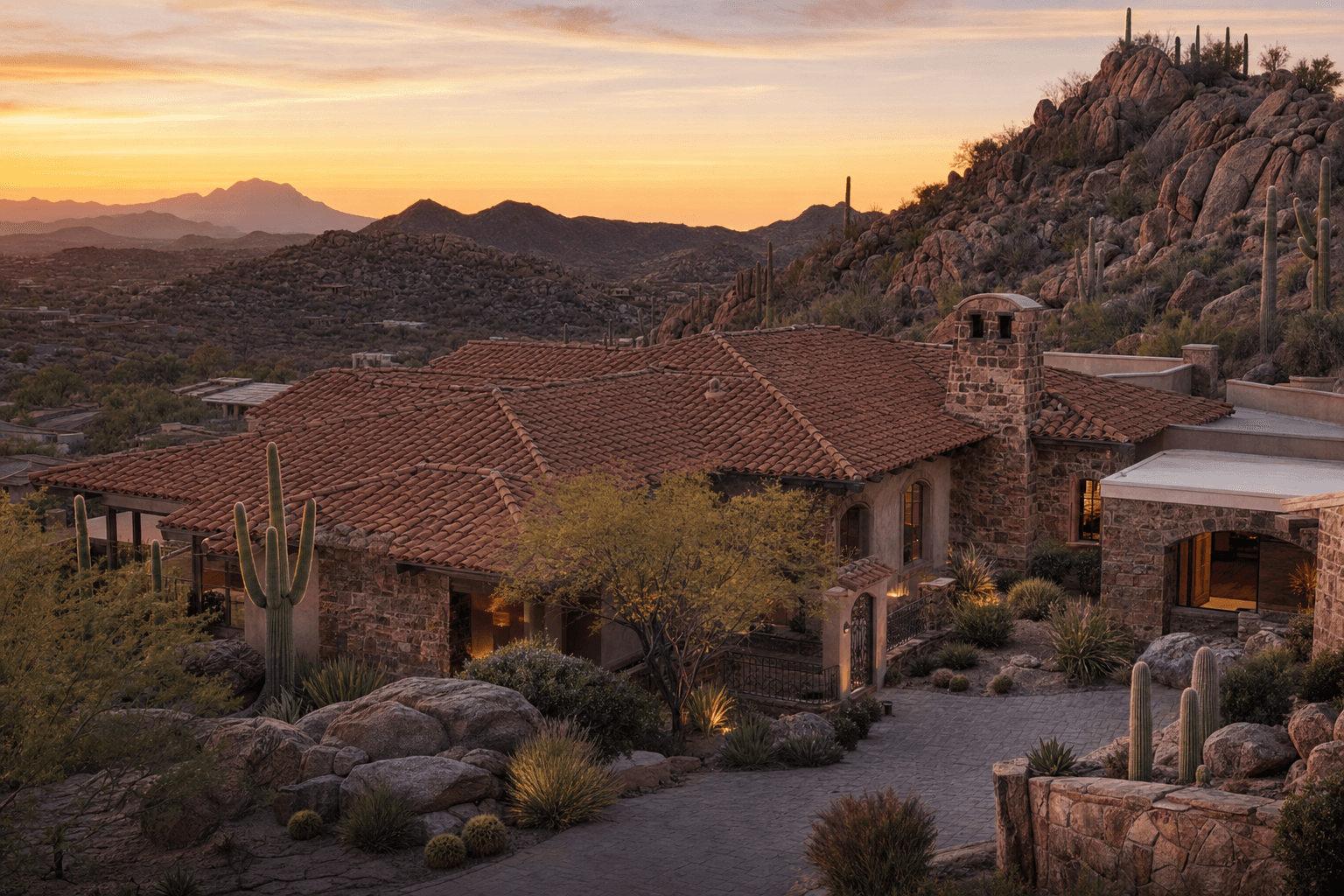
A roof on a flat lot in the central valley faces UV load, occasional monsoon wind, and thermal cycling. A roof on a Cave Creek hillside lot faces all of those plus higher wind exposure, debris impact, and a wildland-interface context that changes the details.
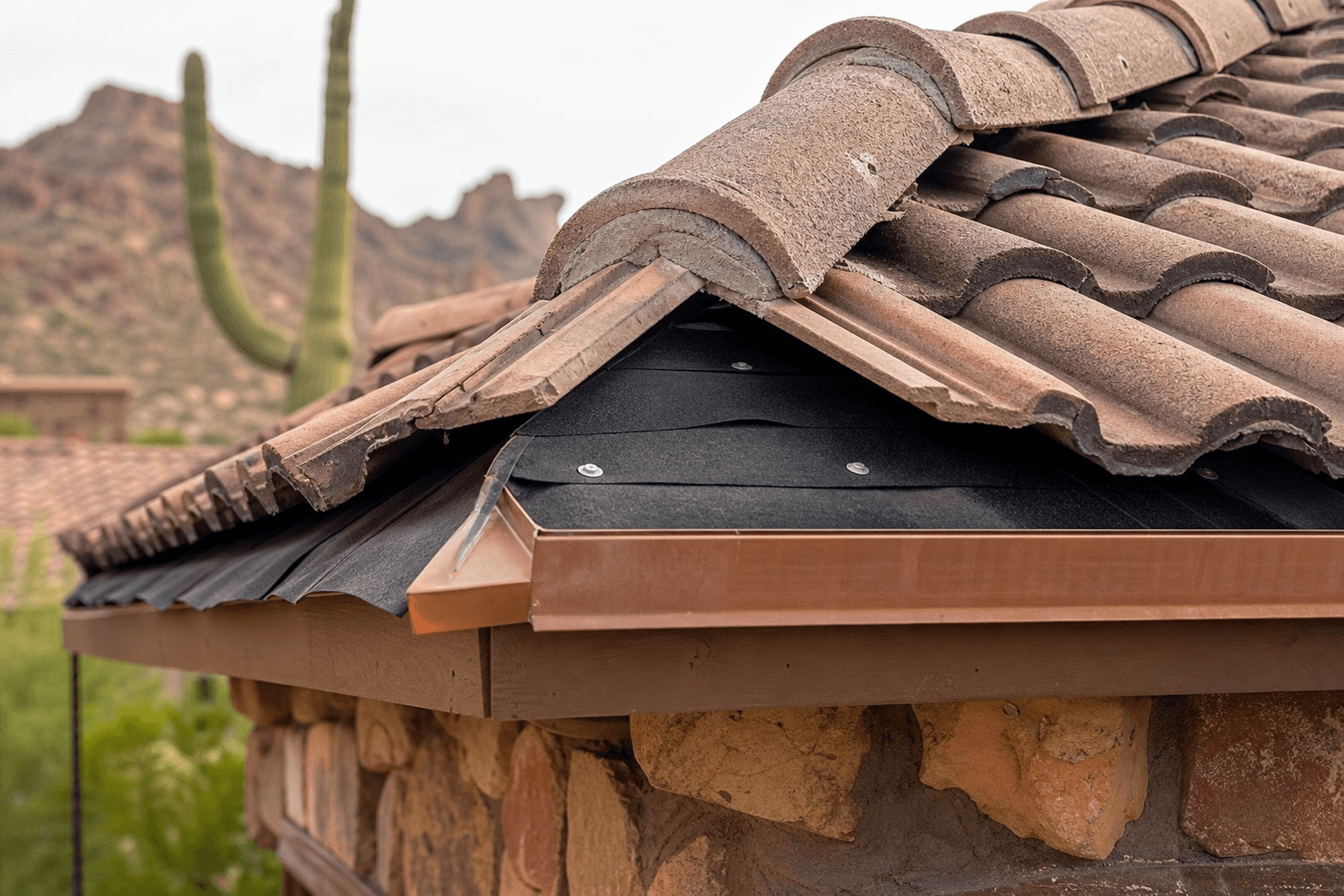
The fix is specification: synthetic high-temperature underlayment, properly fastened. Wind-uplift detailing at ridges and hips. Class A roof assembly. Ember-resistant venting. Documented flashing at every penetration. We build to the lot, not to the manufacturer minimum.
What we install
Roofing systems matched to Cave Creek architecture.
Tile, foam, metal, shingles where appropriate, and the details that make them perform in foothills conditions.
Estate and hillside homes
Residential Roofing
Roof replacement and installation for custom and semi-custom homes across Cave Creek's foothills, washes, and ridge lots.
Read the specificationConcrete and clay tile
Tile Roof Installation and Reroof
Tile reroofing with high-temperature underlayment, ridge detailing, and documentation for the dominant roof type on Cave Creek estate properties.
Read the specificationLow-slope desert architecture
Foam Roof Installation and Recoat
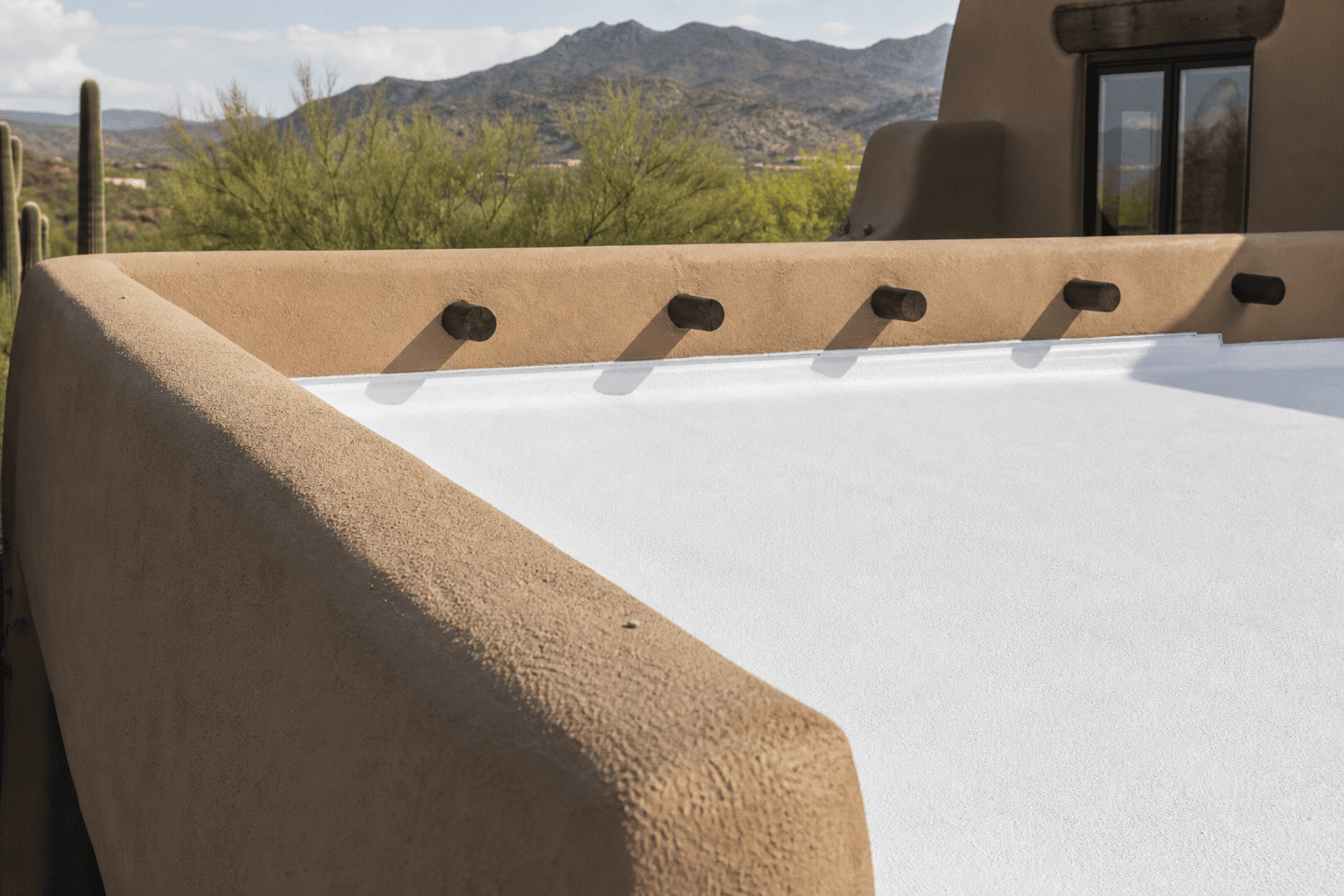
Foam roof recoats and rebuilds for Pueblo Revival, Territorial, and contemporary low-slope roof sections.
Read the specificationContemporary foothills work
Metal and Standing Seam Roofing
Standing seam and architectural metal roofing for contemporary remodels, additions, and new builds across Cave Creek.
Read the specificationAppropriate applications
Shingle Roofing
Architectural shingle roofing for older properties, accessory structures, rear elevations, and cases where shingles fit the building.
Read the specificationWildland-interface lots
Wildfire-Resistant Detailing
Class A assemblies, ember-resistant venting, debris-clearable valleys, and metal flashing for hillside and wildland-interface properties.
Read the specificationThe lots we work in
Service areas with real topography.
We reference the lot because the lot changes the roof: Spur Cross washes, Skull Mesa ridges, Sentinel Mountain exposure, Black Mountain edges, Tonto Hills wildland-interface conditions, and Continental Mountain access.
Town-wide service
Cave Creek Roofing
Roofing for Cave Creek homes, from the historic core to custom foothills properties and larger desert lots.
Read the specificationWash and foothills properties
Spur Cross Roofing
Roofing for Spur Cross homes where lot exposure, vegetation, drainage, and wildland-interface context matter.
Read the specificationRidge and estate exposure
Skull Mesa Roof Replacement
Documented roof replacement and repair for Skull Mesa properties with wind, wildfire, and hillside exposure.
Read the specificationHigh-exposure lots
Sentinel Mountain Roofers
Roofers for Sentinel Mountain properties with documented scopes for tile, metal, foam, and wildfire-aware detailing.
Read the specificationCave Creek and Carefree edge
Black Mountain Roofing
Roofing near Black Mountain for custom homes, tile systems, foam sections, and documented inspections.
Read the specificationWildland-interface homes
Tonto Hills Roofing
Roofing for Tonto Hills properties with emphasis on Class A assemblies, tile underlayment, and wildfire-aware detailing.
Read the specificationFoothills-grade specification
Continental Mountain Roofing
Roofing for Continental Mountain properties with lot-specific scopes for tile, foam, metal, and roof inspection.
Read the specificationCave Creek and Carefree edge
Carefree Border Roofing
Roofing for properties near the Cave Creek and Carefree border, with the same documented, climate-specific approach.
Read the specificationThe Canyon process
Specification before scope.
A roof project should leave behind more than a paid invoice. It should leave a record.
01
Walk the roof and the lot
A senior estimator documents the existing roof, the lot exposure, drainage, vegetation, elevations, and wildland-interface conditions.
02
Write the specification
The scope names materials, assembly, underlayment, flashing, fastening, ventilation, and details that match the property.
03
Install with documentation
Crews document each layer, penetration, flashing condition, and important detail throughout the project.
04
Deliver the file
The homeowner receives the written scope, warranty terms, photo record, and closeout documentation.
Common questions
What homeowners ask before the inspection.
Do I need a permit to replace my roof in Cave Creek?
Yes. The Town of Cave Creek requires a building permit for full reroofs and most structural roof repairs. We pull the permit, manage inspections, and provide closed-permit documentation when the work is complete.
My property is on a hillside. Are there special requirements?
Often, yes. Hillside and wildland-interface properties typically call for Class A roof assemblies, ember-resistant venting, and metal flashing at penetrations. We treat these as standard practice on hillside work.
How long should a tile roof actually last in Cave Creek?
The tile itself can last for decades. The underlayment beneath it is the consumable component. With a properly specified synthetic high-temperature underlayment, 25-35 years is a realistic target before reinstallation.
My foam roof is 7 years old and looks chalky. Recoat or replace?
Usually a recoat if the foam itself is intact. A proper recoat every 4-6 years is part of normal foam roof ownership and can extend the system's life by decades.
What does monsoon damage look like on a Cave Creek hillside lot?
Lifted ridge tiles, displaced bird stops, debris-impact cracks, and water intrusion at penetrations are common signs. Ridge detailing matters more on exposed lots.
Will my homeowner's insurance cover a roof replacement?
It depends on cause and policy. Storm damage is typically treated differently from gradual UV degradation. We document damage thoroughly and never inflate scope to manufacture a claim.
What's the difference between a roof inspection and an estimate?
An estimate is a sales document. An inspection is a written, photographic record of roof condition, exposure, remaining service life, and recommended scope.
Schedule your consultation
Have a senior estimator walk the roof and the lot.
We document the exposure, specify the assembly to match, and put it all in writing.